Publications
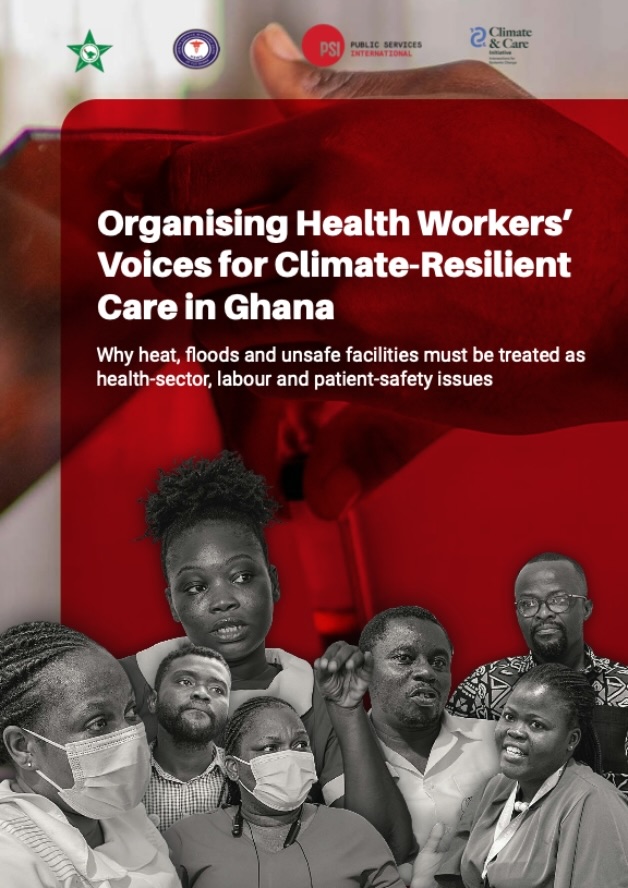
Produced by Public Services International (PSI), the Health Services Workers' Union Ghana (HSWU), and the Ghana Registered Nurses and Midwives Association (GRNMA) as part of the Climate and Care Initiative, this policy brief examines how extreme heat, flooding, and deteriorating health infrastructure are affecting the working conditions of health workers in Ghana. Drawing on evidence gathered from more than 600 health workers, the document argues that climate adaptation in the health sector must incorporate labour protection, occupational safety, and worker participation as central elements for ensuring resilient health systems and quality care.
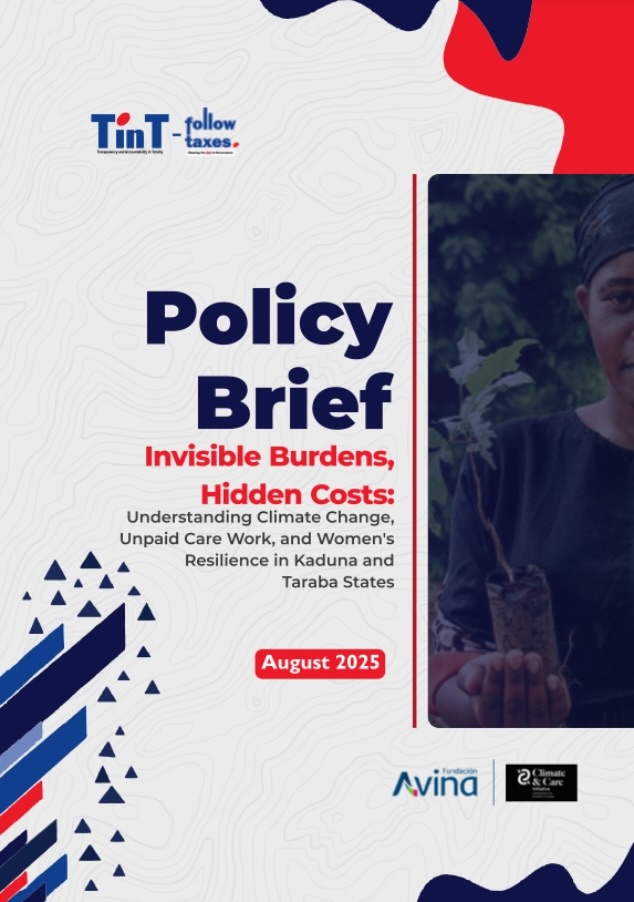
Produced by the Transparency and Accountability in Totality Initiative (TinT-FollowTaxes) as part of the Climate and Care Initiative, this document examines how climate change is increasing women’s unpaid care workload in Kaduna and Taraba States, Nigeria. Drawing on quantitative and qualitative evidence, it shows how droughts, floods, and food crises deepen gender inequalities and proposes an adaptation agenda based on the Four Rs of care: Recognize, Reduce, Redistribute, and Represent.
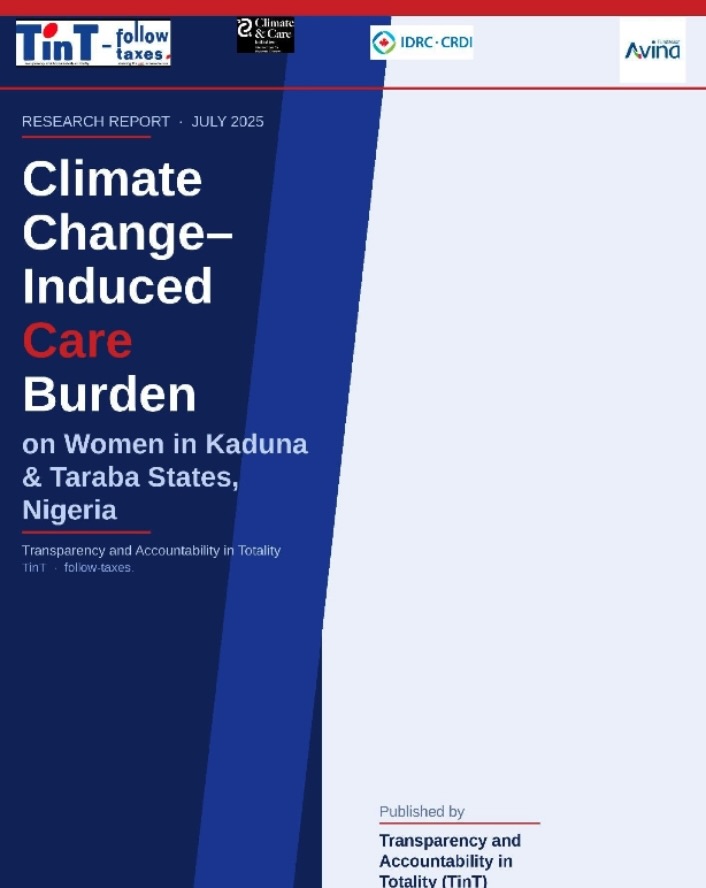
Produced by the Transparency and Accountability in Totality Initiative (TinT-FollowTaxes) as part of the Climate and Care Initiative, this research report presents detailed evidence on the impacts of climate change on women’s care burden in Kaduna and Taraba States, Nigeria. Using a mixed-methods approach that included surveys of 1,400 women, interviews, and focus group discussions, the study documents how climate crises increase the time devoted to care, reduce economic opportunities, and generate survival strategies that deepen women’s vulnerability. The document concludes with recommendations for integrating care into climate adaptation and social protection policies.
Produced by the Latin America Research Component at the National University of San Martín (UNSAM) as part of the Climate and Care Initiative, this policy brief explores the nexus between climate, extractivism, and care in Latin America. Based on participatory action research carried out with community organizations and ecofeminist and Indigenous movements from several countries in the region, it demonstrates how environmental degradation increases the unpaid care burden carried primarily by women. The document calls for integrating care into climate and just transition policies by strengthening community care infrastructure, territorial participation, and gender- and human rights-based approaches.
Produced by the Climate and Care Initiative consortium, comprising Fundación Avina, Oxfam Canada, the United Nations Research Institute for Social Development (UNRISD), the National University of San Martín (UNSAM), and the University of the Witwatersrand (Wits University), in collaboration with the Global Alliance for Care and with support from the International Development Research Centre (IDRC) and the Værekraft Foundation, this chapeau document synthesizes the initiative’s main findings, lessons, and impacts. Drawing on the experience of 23 projects across Latin America, the Caribbean, and Sub-Saharan Africa, it demonstrates that care infrastructure is also climate resilience infrastructure and provides recommendations for governments, funders, and international organizations seeking to advance gender-responsive and just transitions.
This policy brief, developed by The Asia Foundation in coordination with the Climate and Care Initiative, was carried out with the aid of a grant from Canada’s International Development Research Centre (IDRC), Ottawa, Canada. It builds on a growing body of research that explores the connections between climate change, environmental degradation, care work, and the resulting gender and social inequalities.
Both caring for people and caring for the planet are fundamental to human survival, yet both are systematically exploited for short-term economic gains. The consequences of this exploitation include worsening climate impacts and deepening social disparities, particularly affecting women and marginalized communities.
The climate crisis and the crisis of care are deeply interconnected, as climate change increases the demand for care work while also weakening already fragile care infrastructures. Despite this, global climate adaptation and mitigation efforts have largely overlooked the critical role of care in fostering community resilience and ecosystem sustainability. Moreover, many climate solutions unintentionally reinforce inequalities in care labor, disproportionately affecting women, girls, and marginalized populations in low- and middle-income countries. Addressing these challenges requires a holistic and intersectional approach, recognizing that policies tackling climate change must also consider the redistribution of care labor and the restructuring of economic and social systems to support quality care. Integrating care work into climate policy is essential to ensuring a just and sustainable future for all.
This working paper presents a comprehensive conceptual framework that explores the intrinsic connections between climate change and care work. Developed by the Southern Centre for Inequality Studies (SCIS) and supported by IDRC Canada, it offers a structural analysis of how systems of privilege—capitalism, colonialism, and patriarchy—shape both environmental degradation and care inequalities.
Bridging feminist economics, political ecology, and climate policy, the framework outlines how climate change exacerbates unpaid care burdens, especially for women in the Global South, and proposes integrated approaches that center care in climate adaptation, mitigation, and financing strategies. The publication calls for a transformative policy agenda that recognizes care work not only as essential social infrastructure but also as a key pillar for climate resilience and justice.
By Sonia Phalatse, Julia Taylor, and Imraan Valodia
Published by the Southern Centre for Inequality Studies, University of the Witwatersrand
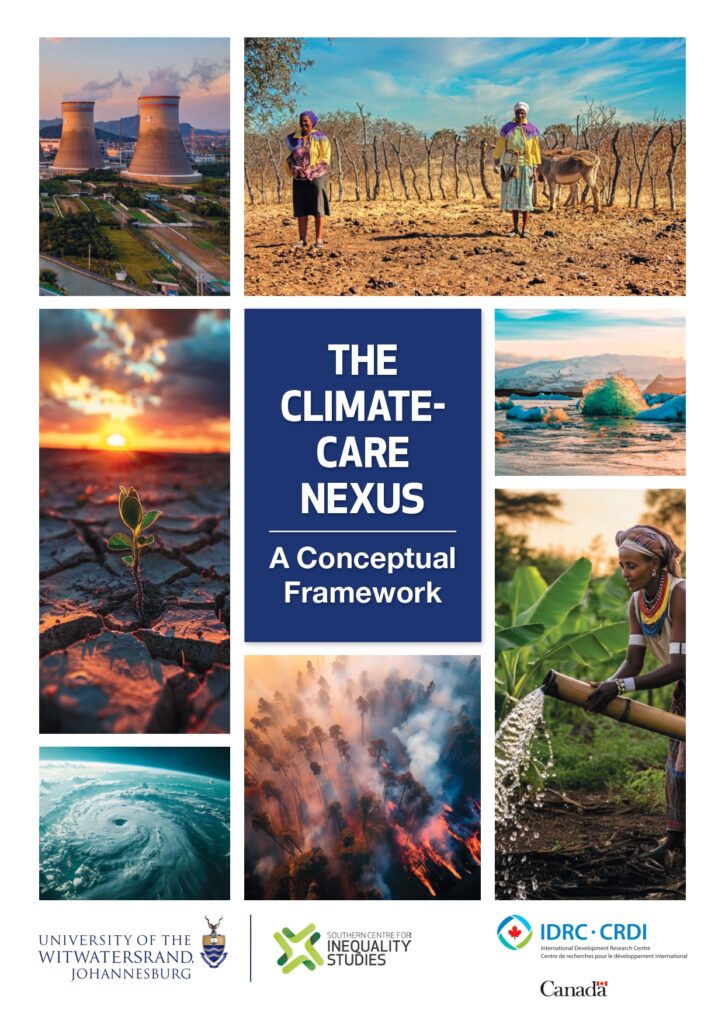
This working paper presents a comprehensive conceptual framework that explores the intrinsic connections between climate change and care work. Developed by the Southern Centre for Inequality Studies (SCIS) and supported by IDRC Canada, it offers a structural analysis of how systems of privilege—capitalism, colonialism, and patriarchy—shape both environmental degradation and care inequalities.
Bridging feminist economics, political ecology, and climate policy, the framework outlines how climate change exacerbates unpaid care burdens, especially for women in the Global South, and proposes integrated approaches that center care in climate adaptation, mitigation, and financing strategies. The publication calls for a transformative policy agenda that recognizes care work not only as essential social infrastructure but also as a key pillar for climate resilience and justice.
By Sonia Phalatse, Julia Taylor, and Imraan Valodia
Published by the Southern Centre for Inequality Studies, University of the Witwatersrand

This working paper argues that care systems—encompassing paid and unpaid care work, social protection, and community healing networks—are essential infrastructure for climate resilience and justice. Despite their centrality, care systems remain largely invisible in climate finance architecture.
The report calls for a paradigm shift: to treat care as climate infrastructure, embed reparative principles into financing mechanisms, and ensure inclusive governance that elevates caregivers’ voices—especially women, Afrodescendant, and Indigenous communities.
Through detailed analysis of the Green Climate Fund (GCF), Adaptation Fund (AF), and the emerging Fund for Responding to Loss and Damage (FRLD), the paper proposes concrete reforms to integrate care into each mechanism’s policies, indicators, and financing instruments.
By centering care, climate finance can evolve from extractive models toward regenerative, community-led systems that sustain well-being, equity, and collective resilience—transforming how we define, govern, and invest in climate action.

This session highlights the transformative role of care systems in advancing equitable and climate-resilient societies. Grounded in experiences from grassroots organizations across the Global South, it emphasizes how climate change exacerbates care burdens while care work itself becomes a driver of resilience and justice. By centering the voices of local leaders, the event seeks to influence just transition frameworks and promote actionable pathways that integrate care into climate strategies
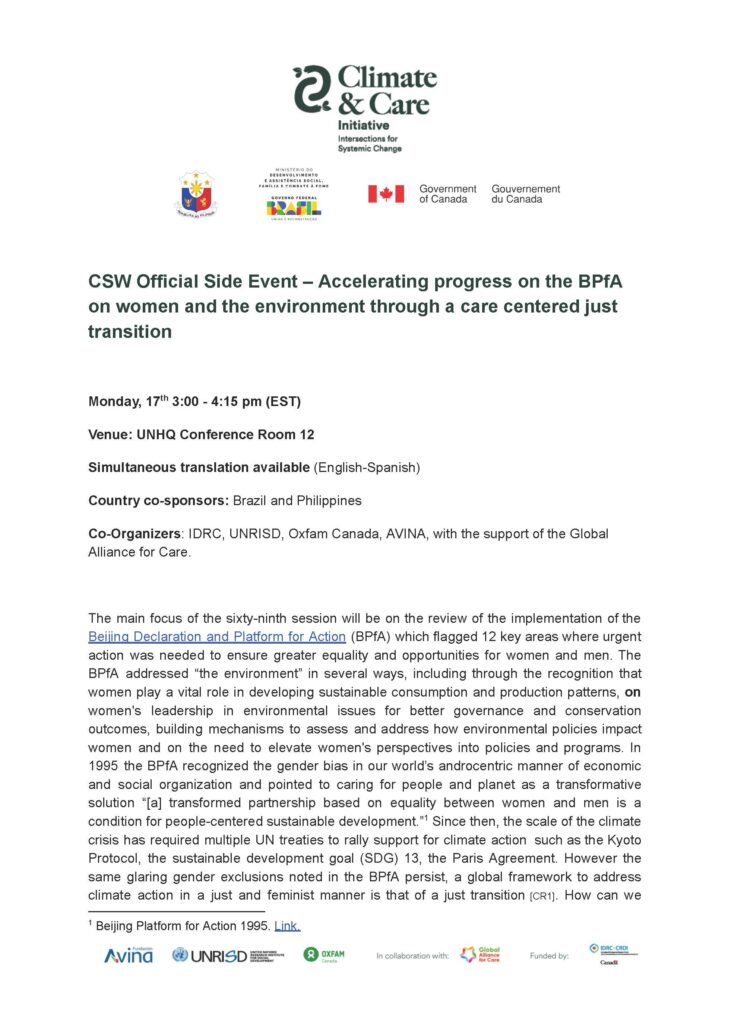
As part of the Commission on the Status of Women (CSW69), we invite you to join our official side event. Thirty years after the Beijing Declaration and Platform for Action (BPfA), this session will explore the intersection of the climate and care crises, emphasizing why a care-centered just transition is essential to accelerate progress on gender equality and sustainability.
The discussion will feature findings from the Climate & Care Initiative, including research supported by Canada’s IDRC, as well as insights from ecofeminist and grassroots organizations from the Global South. Policymakers will also engage in a dialogue on how to ensure that COP30 in Brazil advances the BPfA commitments with a climate and gender justice perspective.
Find more about the event in the concept note.
Confirm your attendance here: https://forms.gle/wRddfZAS4JwLMi2m7
Please note that the Initiative is not able to provide funding for any travel costs to the conference.

La cartilla, desarrollada por la Corporación Red Juvenil de Derechos Humanos con el apoyo de Fundación Avina, se inscribe en el marco de la Iniciativa Clima y Cuidados y propone una introducción accesible a la relación entre cambio climático, gestión de riesgos y trabajo de cuidados.
A través de un enfoque pedagógico, el documento presenta conceptos clave sobre cambio climático, como mitigación y adaptación, y los vincula con la gestión de riesgos naturales, incorporando el enfoque clima-cuidados para evidenciar cómo los impactos climáticos profundizan desigualdades existentes y aumentan la carga de cuidados, especialmente en mujeres y comunidades vulnerables.
En este sentido, la cartilla promueve una mirada integral que articula el cuidado de las personas y del ambiente, destacando la importancia de fortalecer la resiliencia comunitaria, redistribuir los cuidados y avanzar hacia una transición justa centrada en la sostenibilidad de la vida.