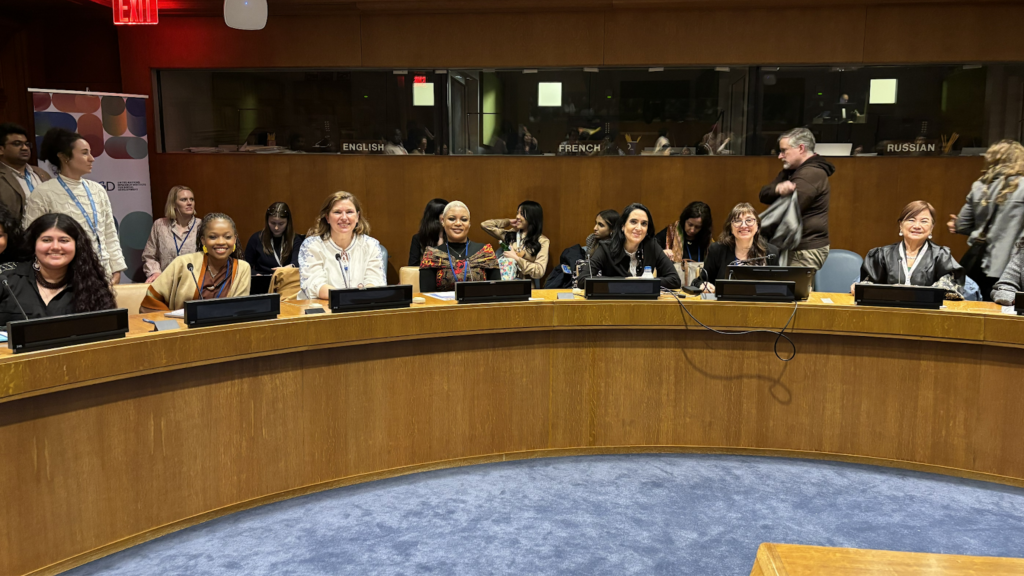
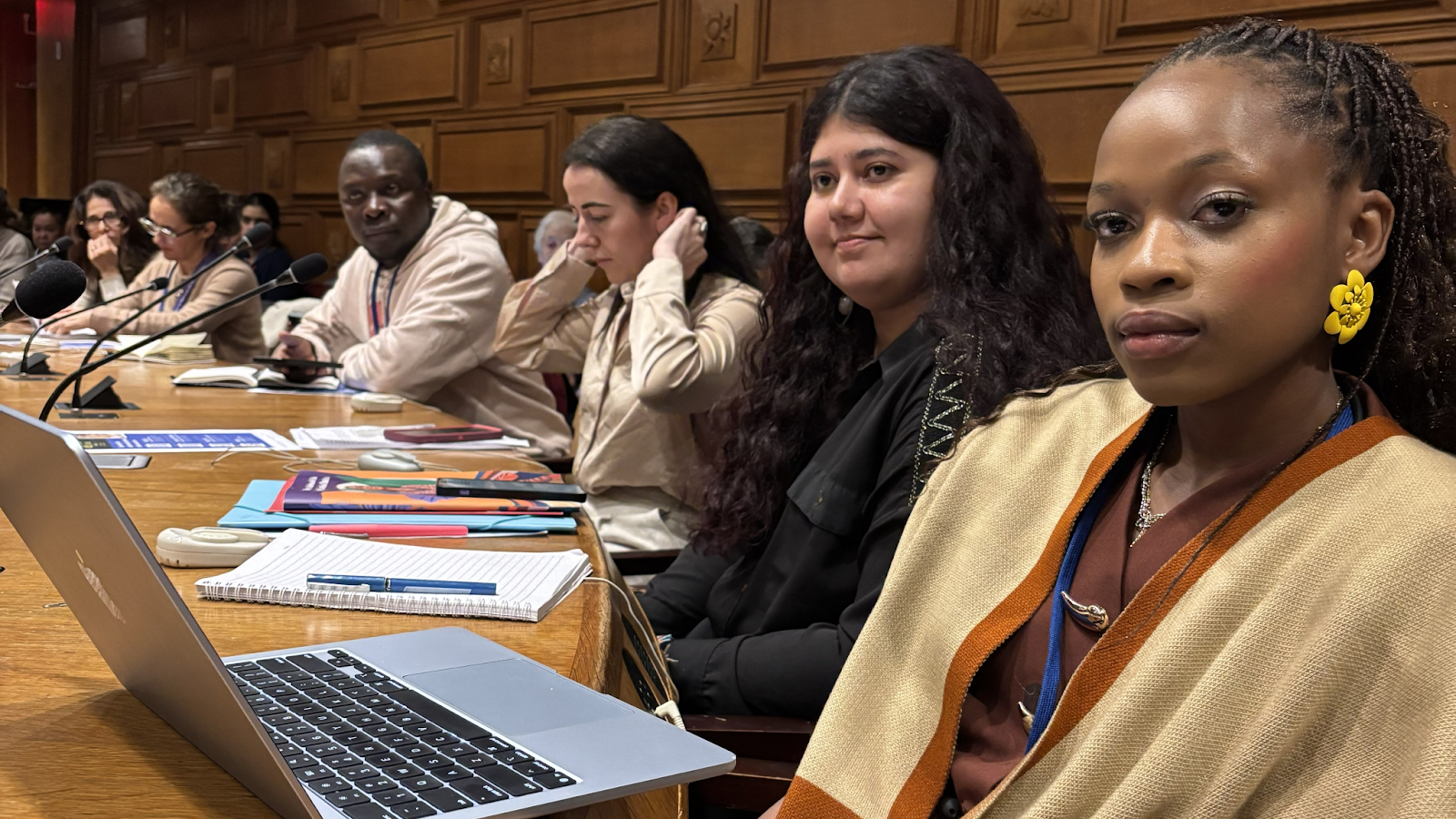
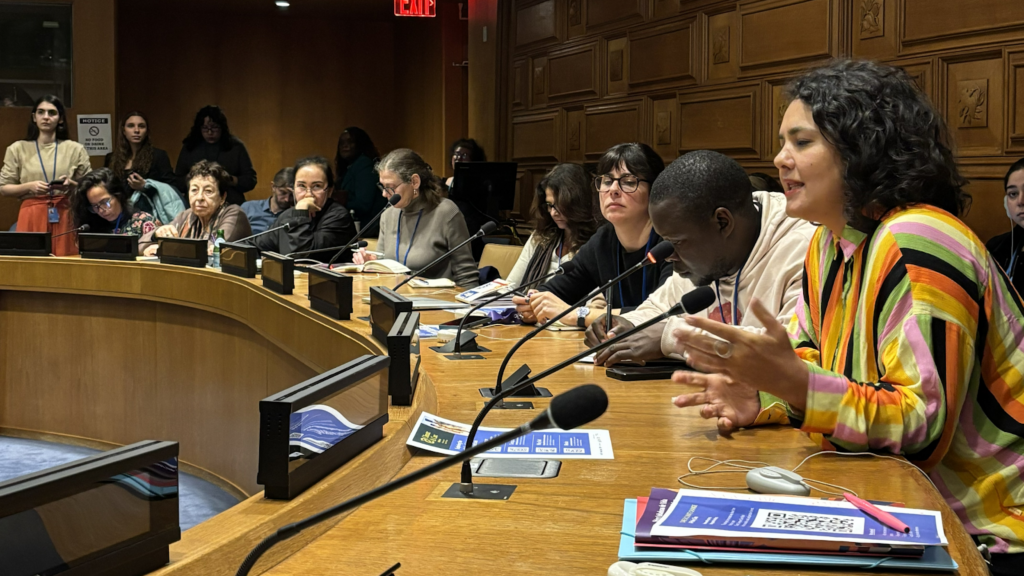
As part of the seventieth session of the UN Commission on the Status of Women (CSW70), the Climate and Care Initiative organized the official side event “Care and Climate: How Care Systems Shape Access to Justice in a Just Transition”, held at United Nations Headquarters in New York.
Convened by UNRISD, IDRC, Fundación Avina, and WEDO, with the support of the Global Alliance for Care, and the governments of Colombia, Mexico, Finland and the Philippines, the session brought together governments, multilateral institutions, civil society organizations, and grassroots leaders. In a global context where climate change continues to intensify inequalities, the discussion emphasized a central message: care is not peripheral to climate action; it is essential infrastructure for resilience, adaptation, and justice.
Why the care–climate nexus matters
Climate change is not gender-neutral. Across regions, its impacts are disproportionately borne by women and marginalized communities, particularly in the Global South. As droughts, floods, displacement, and health risks, so does the demand for unpaid care work.
At the same time, both formal and community-based care systems are indispensable for sustaining life, enabling recovery, and supporting climate adaptation. Yet, as highlighted throughout the session, care remains largely absent in climate policy and financing frameworks, creating barriers to justice and participation.
Government representatives from the Philippines and Mexico, highlighted the relevance of developing functional care systems, integrating the climate and just transition strategies policies, creating a holistic approach to both agendas. Their interventions emphasized the need to embed care within national climate plans, adaptation policies, and financing mechanisms, as well as the importance of advancing gender-responsive approaches within public policy frameworks.
Recognizing care as climate infrastructure is therefore not only a conceptual shift, but a political and structural imperative.
Grounding the discussion in lived experience
A central strength of the event was the presence of organizations working directly at the intersection of climate and care.
Grantees from Climate and Care Initiative Fund shared grounded perspectives on how this nexus shapes daily life in their communities and how their work is actively addressing it.
- Xiomara Acevedo from Barranquilla +20 (Colombia), highlighted how the care–climate nexus operates as a structural barrier to justice, shaped by patriarchy, colonialism, and extractivism. Their experience demonstrates how climate impacts—such as floods, heat, and territorial dispossession—intensify unpaid care burdens and limit women’s participation in economic and political life.
- Malkia John from Sauti Salama (Kenya), presented a model that integrates care and climate action to prevent gender-based violence in climate-affected communities. Their approach strengthens community care systems through local leadership, clean energy solutions, and access to services, recognizing that climate stress increases care burdens and, in turn, vulnerability.
Together, these experiences illustrate a key insight: addressing climate change without addressing care systems risks deepening existing inequalities. Strengthening care systems reduces vulnerability, enhances resilience, and expands access to justice.
Care as a pathway to a just transition
Throughout the session, speakers emphasized that a truly just transition must go beyond decarbonization and confront the social and economic systems that sustain life. In its intervention Fundación Avina, underscored that care systems are already functioning as climate infrastructure across territories: “Care sustains life, supports recovery, strengthens resilience, and enables adaptation in the face of climate change.”
However, despite their centrality, care systems remain largely absent from climate finance, adaptation strategies, and national policy frameworks. This gap limits the effectiveness of climate action and reinforces structural inequalities.
The discussion pointed to the urgent need to:
- Integrate care into climate finance and adaptation policies
- Recognize unpaid care work as a key dimension of climate justice
- Support community-led and feminist approaches emerging from the Global South
- Ensure that those who sustain care systems are included in decision-making spaces
Amplifying voices from the Global South
The event also featured a visual showcase bringing together testimonies from organizations across Latin America, the Caribbean, and Sub-Saharan Africa. Through images and reflections, grantees responded to a simple but powerful question: What does the connection between climate and care mean in your context?
These illuminated the everyday realities of the nexus—how climate impacts reshape care work, and how communities are responding through collective action, knowledge, and resilience. As noted during the presentation, these voices are not only documenting impacts—they are actively shaping solutions and pathways toward a care-centered transition.
The CSW70 side event reaffirmed that advancing gender equality and climate justice requires integrating care into both policy and practice.
By connecting research, advocacy, and grassroots experience, the Climate and Care Initiative continues to build evidence and amplify solutions that demonstrate the transformative potential of this approach.
As global discussions move toward future milestones such as COP31 and CSW72, the challenge remains clear: to ensure that care systems are recognized, valued, and embedded at the center of climate action.
Because caring for people and caring for the planet are inseparable—and a just transition depends on both.
Agenda of the event here
Watch the full session here:
https://webtv.un.org/en/asset/k1h/k1hv6sdkee